How homogenous is ERA5?
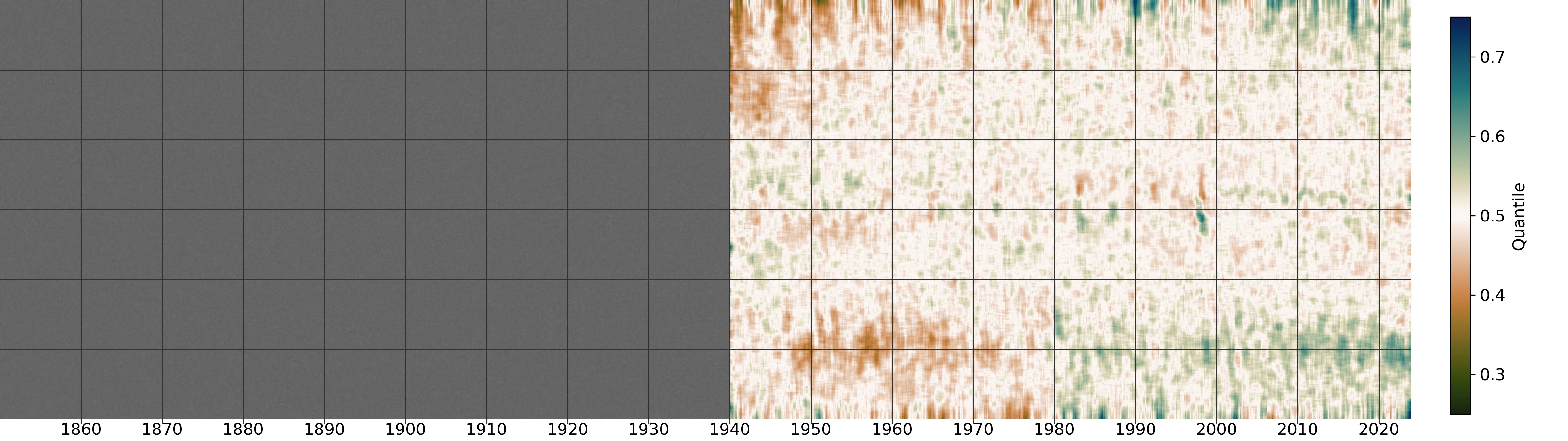
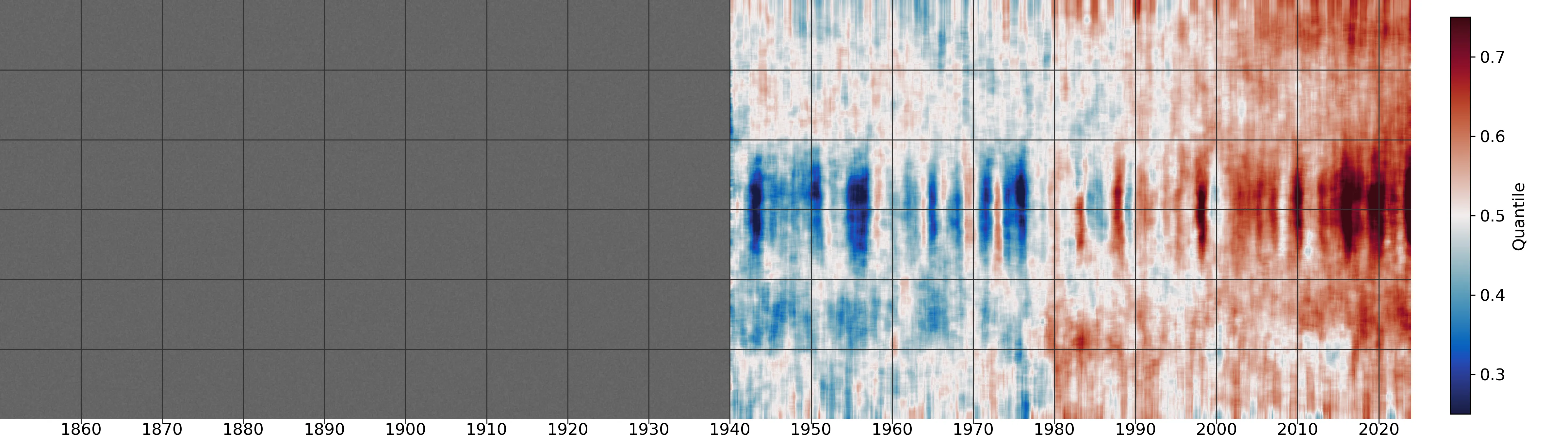
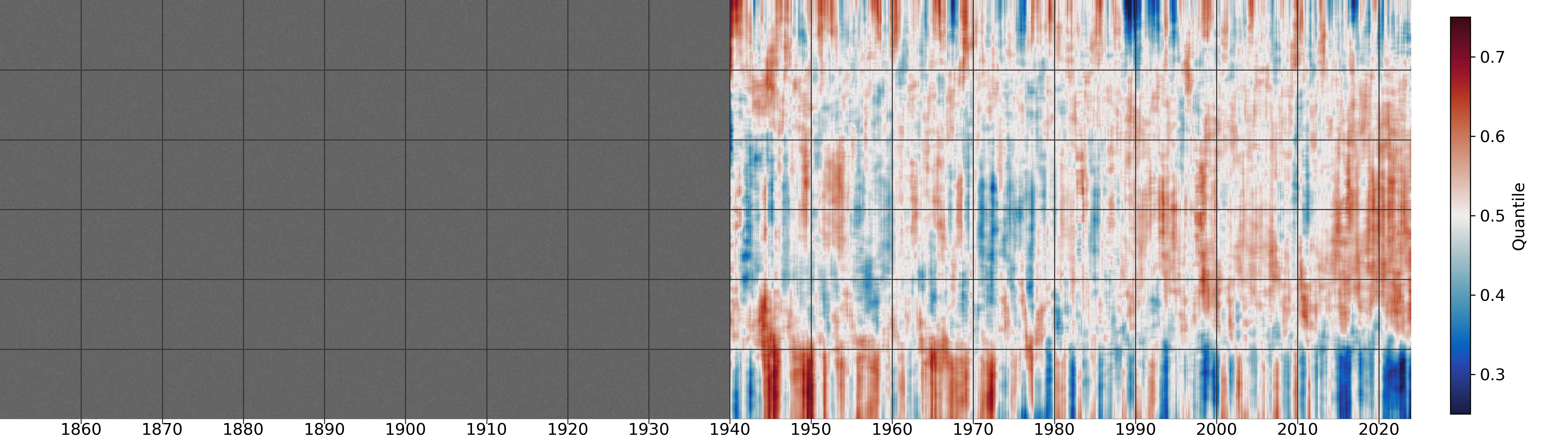
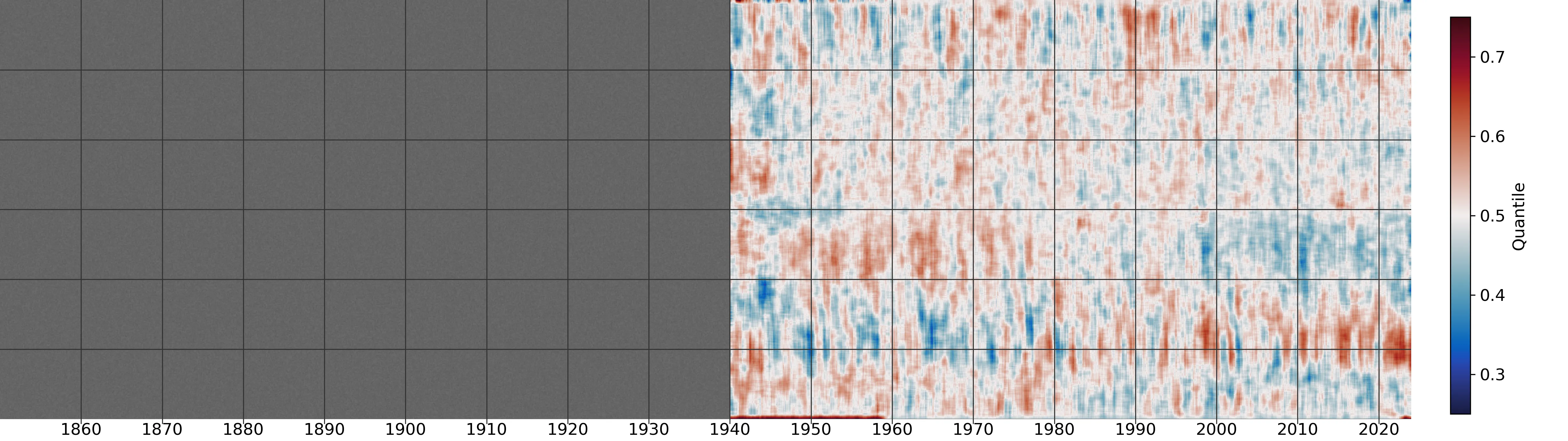
20CRv3 is reasonably homogenous back to about 1950- ERA5 only goes back to 1940, but we can’t expect it to be homogenous, because it assimilates a much larger and more changeable set of observations. We can look at the homogeneity of ERA5 by making normalized extended-stripes plots of the variables of interest:
Total precipitation
2m temperature
Mean sea level pressure
10m u component of wind
10m v component of wind
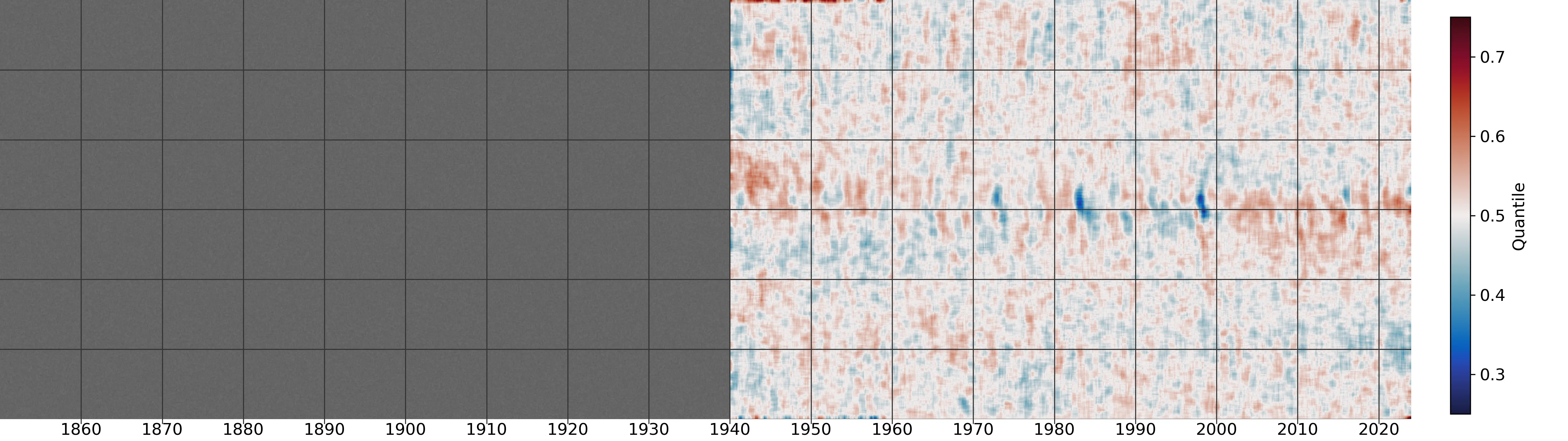
2m relative humidity
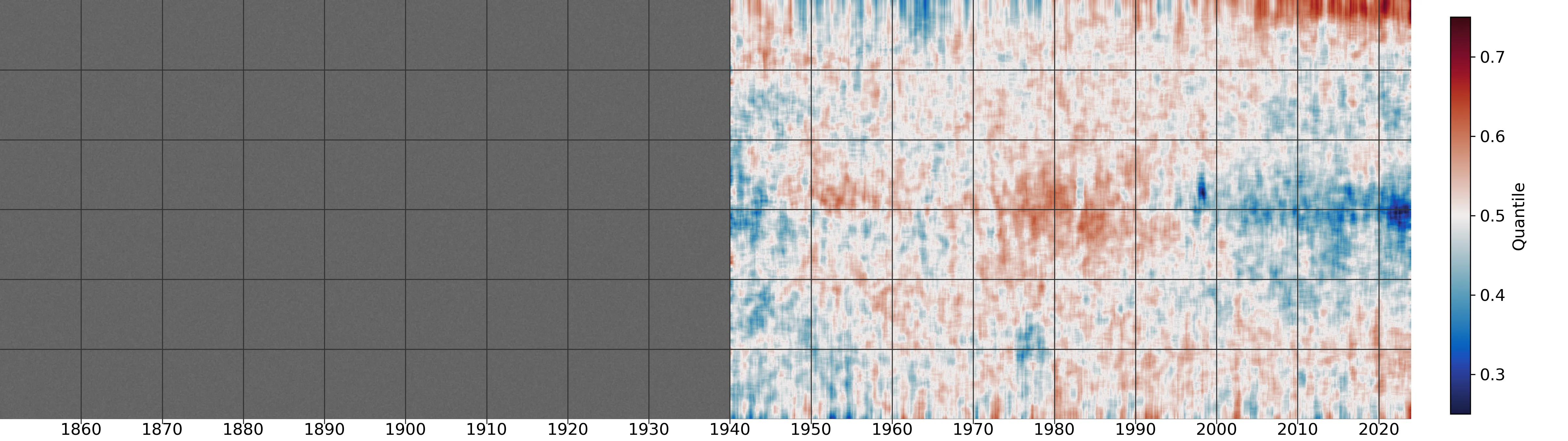
Unsurprisingly, ERA5 shows strong inhomogeneities: Two big changes occur in about 1980 and about 1998. The former produces a global change in precipitation, and is probably caused by the assimilation of MSU satellite observations; the second is concentrated in the tropics and is probably caused by the assimilation of TRMM satellite observations.